
In a statement, activists from the Telangana Women and Transgender Organizations Joint Action Committee (WT-JAC), commenting on the Supreme Court-appointed Commission Report in the ‘Disha Encounter’ Case, in which four young people were killed on December 6, 2019 in Telangana, have insisted that FIR be registered against all the policemen “specifically named and indicted by the Commission and they be arrested.”
Signed by petitioners before the Apex Court K Sajaya, V Sandhya, M Vimala and Meera Sanghamitra, the statement, even as welcoming the Commission’s Report for “upholding ‘rule of law’ and recommending criminal action against 10 policemen guilty of murder of four persons, including 3 minor boys”, says, “We remind the senior police officers, political leaders and celebrities who applauded this fake encounter, that as social activists, we will hold them responsible and accountable to secure our right to justice, while challenging unconstitutional methods of ‘seeking justice’.”
Text:
The Justice VS Sirpurkar Commission of Inquiry on the ‘encounter’ killings of four young people (who were accused of rape and murder of a young doctor) on 6th Dec, 2019 in Hyderabad has submitted its report to the Supreme Court. Referring back the matter to the Telangana High Court, the Apex Court directed on 20th May that copies of the Report be made available to the parties, which includes the undersigned, members of WT-JAC Telangana.After meticulously studying thousands of pages of documentary, forensic evidence and cross-examining nearly 140 individuals, the Commission recommended that all the ten police personnel who were involved in the killing of the four young men must face trial for murder “under Section 302 r/w 34 IPC, 201 r/w 302 IPC and 34 IPC”. The Commission concluded that the four youth were deliberately fired upon by the police with an intent to cause their death and with the knowledge that the firing would result in their death. It also held that the accused did not snatch any weapons from the police party and hence the claim of firing in 'self-defence’ is false.
The Commission unambiguously states, “Each one of them were responsible for the safe keeping of the four deceased suspects. If either by acts or omissions they failed to fulfil their responsibility, then their common intention to cause the deaths of the deceased suspects is established. Their conduct subsequent to the deaths of the deceased suspects in falsifying the record would indicate that not only did they act in furtherance of common intention to give false information in order to screen the offenders but also that, they all acted with the common intention to cause the deaths of the four deceased suspects.”
It may be recalled that the Cyberabad police picked up the four suspects (Mohd. Arif, Chintakunta Chennakesavulu, Jollu Shiva and Jollu Naveen) from their homes in the middle of the night, a day after the 25-year-old veterinarian, Disha’s charred remains were found under a bridge at Chatanpally on the outskirts of Hyderabad on 28th Nov, 2019. In the wee hours of 6th Dec, 2019, the four young persons were killed in an alleged ‘encounter’ by the police.
The same evening, 15 women’s rights and civil rights activists of Telangana including the undersigned approached the High Court via a letter which was converted into WP(PIL) No.173 of 2019. The activists prayed for preservation of the dead bodies, independent autopsy, compliance of SC’s guidelines in PUCL vs Union of India, court-monitored probe and prosecution of the guilty officers for murder. The High Court immediately responded and directed that the bodies be preserved and subsequently passed Orders for implementation of PUCL guidelines.
Even as the Telangana High Court was seized of the matter, a Writ Petition was moved before the Supreme Court seeking inquiry into the said ‘encounter’. On 12th December 2019, the Apex Court constituted the 3-member Commission of Inquiry, headed by Justice VS Sirpurkar, with Justice Rekha Baldota (former Mumbai HC judge) and Dr. D.R. Karthikeyan (former CBI Director) as the other members. As the Order of the Apex Court was silent about the dead bodies of the four young men and collection of evidence, four of the undersigned activists including K Sajaya, V Sandhya, M Vimala and Meera Sanghamitra moved WP (Crl) 364/2019 before the Apex Court seeking directions for collection, preservation, and safe custody of evidence. The Supreme Court directed these four applicants to approach the High Court. Subsequently, K Sajaya moved an application before the Telangana High Court seeking directions on preservation and collection of evidence. The Telangana High court passed detailed Orders in respect of a second autopsy, seizure and preservation of evidence.
The Commission began its hearings on 21st August 2021 in the premises of the High Court of Telangana. Since the pandemic was still raging, the Commission resorted to a hybrid form of proceedings which combined physical and virtual hearings. On behalf of the undersigned, K Sajaya filed an affidavit, deposed before the Commission on 13-09-2021 and made detailed written submissions to the Commission. From August to November 2021, the proceedings of the Commission were regularly reported in the English and Telugu media. Advocates Vrinda Grover, Vasudha Nagaraj and Soutik Banerjee, spearheaded the legal case and represented the activists before the Supreme Court, Telangana High Court and the Commission of Inquiry.
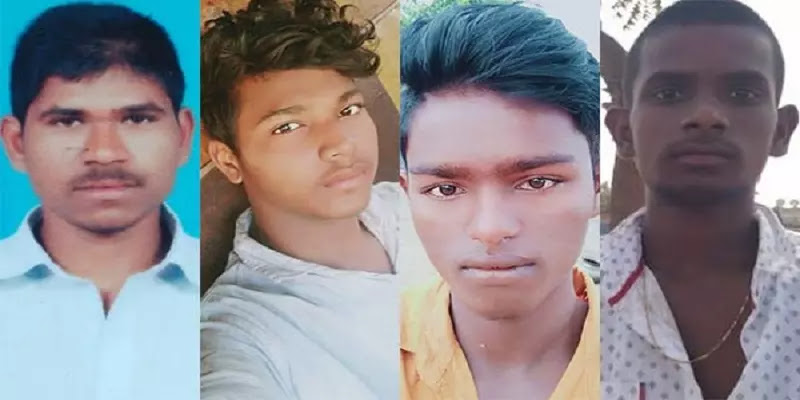
At a time when state authorities are increasingly resorting to extra-judicial methods, the Commission’s observations that “Just as Mob Lynching is unacceptable, so is any idea of instant justice. At any point of time Rule of Law must prevail. Punishment for crime has to be only by the procedure established by law", assumes great significance. While we appreciate the arduous task undertaken by the Commission and welcome the Report, we feel it falls short of naming and recommending similar action against the senior-most police officials in-charge of the investigation, encounter and cover-up of evidence.
In the light of the Commission’s findings, pending further action by the High Court of Telangana to whom the Supreme Court has referred the issue:
- We demand that an FIR be registered immediately against all the policemen specifically named and indicted by the Commission and they be arrested.
- We urge the Hon’ble High Court to take steps for prosecution of the ten policemen on fast-track to fix accountability of all police personnel, including ascribe command responsibility of senior most officers, for the loss of life and restore public confidence in the rule of law.
- We call for speedy investigation into the brutal murder of Disha, which got invisibilised because of the killings of the four suspects.
- We demand that the families of all the four persons killed be provided exemplary compensation by the State, as well as Govt employment to one person in each family.
- We demand that the state government take all necessary measures to safeguard rights of women through due process of law. We strongly condemn that in the name of ‘ensuring safety and freedom for women’, the police and state are creating lawlessness and circumventing the rule of law, by resorting to extra-judicial killings of accused, which can never bring justice to the wronged women / survivors of violence and their families.
Comments
Post a Comment
NOTE: Hateful, abusive comments won't be published. -- Editor