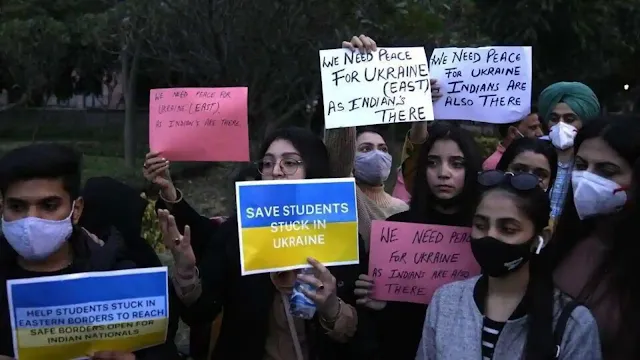
A protest was organised by the Lok Sangram Morcha in Punjab at the Nature Park in Moga against the war in Ukraine. The front is a conglomeration of mass organizations. Around 400 persons participated in the protest comprising of farmers, agricultural workers, intellectuals, students and youth.
The participating organisations were Bharatiya Kisan Union (Krantikari), Lok Sangram Morcha,Grameen Mazdoor Sabha, and Association for Democratic Rights (AFDR). The main speech was made by Swaranjeet Singh of AFDR who highlighted the nature of imperialist contention and the mutual aggression.
The protestors marched through the market place shouting slogans and holding banners, culminating the rally at the bus stand. Resolutions were passed demanding Russian withdrawal of troops from Ukraine, supporting demands of farmers, removing corrupt elements from college managements and introducing positive and democratic aspects about progressive Sikh figures in history in school textbooks, who challenged feudalism.
Swaranjeet Singh condemned the Russian invasion of Ukraine but left no stone unturned in exposing the conspiracy of America and Western countries in patronising the fascist regime of Ukraine and expanding NATO.
He summarised how American and other western countries were banging every nail into the wall to subvert nations and sharpen contention for hegemony. He condemned Russia's imperialist designs and felt there was no justification of Russia's claim that it was forced into the act or its goal was to liberate Ukraine from fascist control.
He also condemned the utter insensitivity of Prime Minister Narendra Modi in not coming to the aid of the victimized Indian medical students by vacating them promptly and on the contrary blamed them for migrating to study.
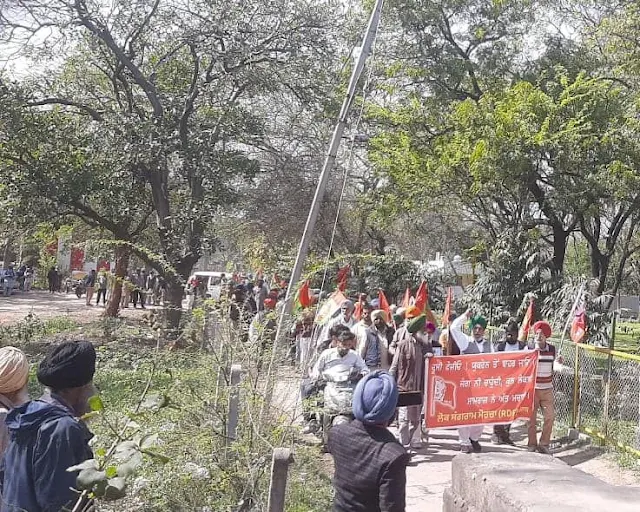
The Kirti Kisan Union in village Chakk Sadoka Jalalabad also held a rally protesting the Ukraine war, criticising the wrongs of both sides and condemning Modi. He condemned the inter-imperialist rivalry to grab profits, path towards obtaining hegemony and entrapping the world people in a cross fire.
Even if small, such a protest lit the first sparks in the anti-war resistance of Punjab. A father of a student in Ukraine Ranajeet Singh recounted the misery his daughter was facing, with basic amenities being denied.
---
*Freelance journalist
Comments