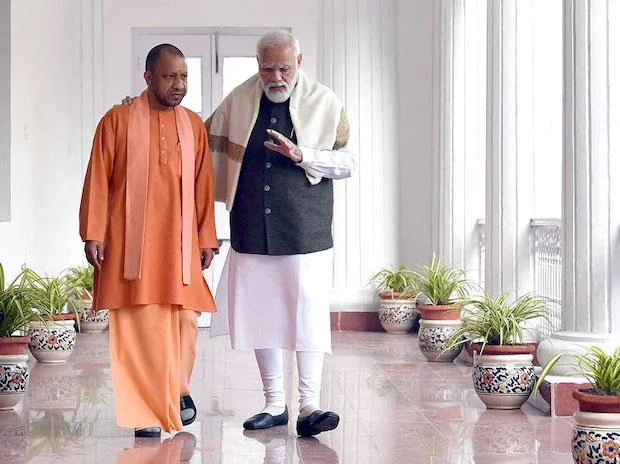
Despite 'unprecedented' repression, Yogi set to win: Akhilesh, Mayawati fail to raise issues

By Harsh Thakor* 

Today, in spite of communalism at its crescendo, the ruling Bharatiya Janata Party is a firm favourite to triumph in the Uttar Pradesh elections. This despite the fact that people in Uttar Pradesh, mainly agrarian and mostly backward state, have suffered a lot from criminal conduct of the State government during the Corona second wave.
The State is mired in most oppressive conditions for the overwhelming majority of people and spiralling unemployment, especially in rural areas. While farmers in the western part of the State rallied in movement through big mobilizations, agrarian distress has affected all regions of the State, marginal and small peasants in particular.
In West UP, non-payment of sugarcane dues is a major problem with nearly half of the payment (Rs 7,000 crore) of the current season still pending. Some dues are pending from the last year. Retail trade been affected and unorganized sections have faced the worst.
The mobilization of farmers especially in West UP undermined the communal push of RSS-BJP to a large extent, besides its support base away. This unnerved RSS-BJP supporters so much that their supporters openly called for genocide of Muslims, besides raking up other issues to convert mosques into temples in Mathura and Kashi.
UP under under Yogi Adityanath has been a laboratory of attacks on minorities and democratic forces. Large scale police attacks were launched on minorities during protests against CAA-NRC-NPR killing many. Economic extractions were made from them in the name of damage to public property, besides publicly defaming the leaders of protest.
Naked police terror is on, epitomized by the “thoko” call by the chief minister forcing all mafia to seek patronage of the ruling RSS-BJP. Struggles of the people of different sections are being crushed with brute force.
Manuwadi code has been imposed on girls. Body of a rape victim, a Dalit girl, was forcibly cremated in Hathras against the will of her family. Cow protection is taken to extreme with large number of stray animals damaging crops of the peasants and the latter rendered helpless.
The Muslim and Dalit communities have been stripped of all their rights. They are being oppressed at an intensity unscaled in history. Any attack on them has the patronage of the ruling party which openly endorses a licence to such acts. Communal Brahminical forces appear to have penetrated every sphere of society.
People have been brainwashed or indoctrinated to a scale similar to Hitler’s Germany on Hindu supremacy with communal propaganda resurrecting at a magnitude unprecedented since 1947. In spite of incidents like patients denied of oxygen in Gorakhpur hospitals, masses still offer loyalty to the BJP or a heinous murder in Laxmipur Kheri. It is phenomena to be studied as to what is still gripping the masses with Hindutva fervour despite unprecedented economic crisis.
Economic disparity has towered as never before. Corporates have never ever been given such a free licence to grab farmers' lands or loot people, while privatisation has made even hospitals and educational institutions unaffordable.
There is no sign that the oppression will subside. Under the patronage of a saffron bigot from their own caste, the feudal landlords of the Thakur caste are likely to intensify the oppression of the poor and landless peasantry, who mostly belongs to the Muslim, Dalit, and backward caste Hindu communities. The social welfare funds have been diverted to help the RSS mission of building up a huge army of militant supporters of the Savarkarite ideology.
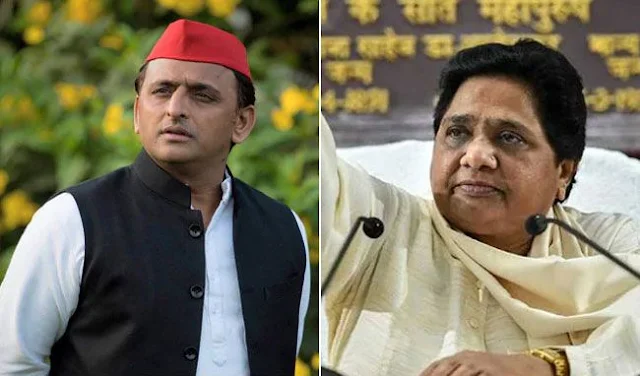
No doubt, there is opposition in UP. Sections of BJP have left the party to join the opposition. The Samajwadi Party and the Bahujan Samaj Party are challenging the hegemony of the RSS-BJP. But these parties in essence represent the ruling classes and do not offer people a genuine democratic alternative.
Never have these opposition parties challenged the agenda of Hindu communalism in any concrete way. On the contrary,they danced to its tune. They offered no effective opposition to the Supreme Court judgement on Babri Masjid which allowed construction of the temple.
Even if condemning communal incidents or agenda, they have never sharpened or crystallised any genuine people’s movement, be it anti-caste, anti-corporate or anti-landlord, or any concrete programme for land distribution, confiscation of foreign capital, curbing prise rise, unemployment, or offering proper housing. It did not link its opposition to CAA-NPR-NCR with any people’s democratic issues or with the day to day burning issues.
One must recall how in the opposition parties supported Hindu brickworship or pooja programmes or lighting of the Ram Shilanyas to win votes. It was endorsing Hindu religious programmes by parties that paved the path for the ascendancy of BJP and chief minister Yogi Adityanath.
No anti-feudal peasant struggle has been launched which could confront the social system at the very roots, giving a blow to the nexus of the pro-Hindutva forces patronising landlords. There is hardly a strong urban labour force with majority migrating for jobs in factories in big cities. Sections of intellectuals have virtually become lackey of the saffron brigade. Those challenging it are mainly Gandhians and Ambedkarites, but with no wider influence.
So-called liberal media is virtual instrument or propaganda machine of saffron politics. It leaves no stone unturned in promoting lies to glorify the Modi-led government and spreading communal poison. Meanwhile, there is incarceration of progressive intellectuals in the name of terrorism -- a weapon in the hands of the rulers to suppress any dissent.
There is much truth in those who say that Yogi Adityanath will be able to keep the atmosphere of Uttar Pradesh toxic with his communal propaganda. With an ardent misogynist, fascist communal bigot like him at the masthead of Uttar Pradesh, the BJP wants to show the original, unapologetic, grotesque face of Hindutva, which has a huge fanfare in the state among the feudal elites.
Indeed, as one critic, Draupadi Ghosh states, “Unapologetic assertion of its communal credentials will help the BJP to mobilise the newly created Hindu vote bank to remain loyal to Hindutva, despite the prominence of the upper-caste Hindus at the helm and the continuation of caste apartheid against the Dalit community.”
Another, Tanmoy Ibrahim, adds, “The opposition parties and their tainted politicians living in murky water are not capable of resisting this Hindutva onslaught...They can be, at their very best, the secret ally of the saffron brigade. To expect them to lead or participate in the democratic struggle against the Hindutva brigade led by Modi or Yogi Adityanath will be a naïve thing.”
---
*Freelance journalist

Comments

TRENDING

Swami Vivekananda's views on caste and sexuality were 'painfully' regressive

By Bhaskar Sur* Swami Vivekananda now belongs more to the modern Hindu mythology than reality. It makes a daunting job to discover the real human being who knew unemployment, humiliation of losing a teaching job for 'incompetence', longed in vain for the bliss of a happy conjugal life only to suffer the consequent frustration.

Jayanthi Natarajan "never stood by tribals' rights" in MNC Vedanta's move to mine Niyamigiri Hills in Odisha

By A Representative The Odisha Chapter of the Campaign for Survival and Dignity (CSD), which played a vital role in the struggle for the enactment of historic Forest Rights Act, 2006 has blamed former Union environment minister Jaynaynthi Natarjan for failing to play any vital role to defend the tribals' rights in the forest areas during her tenure under the former UPA government. Countering her recent statement that she rejected environmental clearance to Vendanta, the top UK-based NMC, despite tremendous pressure from her colleagues in Cabinet and huge criticism from industry, and the claim that her decision was “upheld by the Supreme Court”, the CSD said this is simply not true, and actually she "disrespected" FRA.

Urgent need to study cause of large number of natural deaths in Gulf countries

By Venkatesh Nayak* According to data tabled in Parliament in April 2018, there are 87.76 lakh (8.77 million) Indians in six Gulf countries, namely Bahrain, Kuwait, Oman, Qatar, Saudi Arabia and the United Arab Emirates (UAE). While replying to an Unstarred Question (#6091) raised in the Lok Sabha, the Union Minister of State for External Affairs said, during the first half of this financial year alone (between April-September 2018), blue-collared Indian workers in these countries had remitted USD 33.47 Billion back home. Not much is known about the human cost of such earnings which swell up the country’s forex reserves quietly. My recent RTI intervention and research of proceedings in Parliament has revealed that between 2012 and mid-2018 more than 24,570 Indian Workers died in these Gulf countries. This works out to an average of more than 10 deaths per day. For every US$ 1 Billion they remitted to India during the same period there were at least 117 deaths of Indian Workers in Gulf ...

Stands 'exposed': Cavalier attitude towards rushed construction of Char Dham project

By Bharat Dogra*  The nation heaved a big sigh of relief when the 41 workers trapped in the under-construction Silkyara-Barkot tunnel (Uttarkashi district of Uttarakhand) were finally rescued on November 28 after a 17-day rescue effort. All those involved in the rescue effort deserve a big thanks of the entire country. The government deserves appreciation for providing all-round support.

Uttarakhand tunnel disaster: 'Question mark' on rescue plan, appraisal, construction

By Bhim Singh Rawat*  As many as 40 workers were trapped inside Barkot-Silkyara tunnel in Uttarkashi after a portion of the 4.5 km long, supposedly completed portion of the tunnel, collapsed early morning on Sunday, Nov 12, 2023. The incident has once again raised several questions over negligence in planning, appraisal and construction, absence of emergency rescue plan, violations of labour laws and environmental norms resulting in this avoidable accident.

Celebrating 125 yr old legacy of healthcare work of missionaries

Vilas Shende, director, Mure Memorial Hospital By Moin Qazi* Central India has been one of the most fertile belts for several unique experiments undertaken by missionaries in the field of education and healthcare. The result is a network of several well-known schools, colleges and hospitals that have woven themselves into the social landscape of the region. They have also become a byword for quality and affordable services delivered to all sections of the society. These institutions are characterised by committed and compassionate staff driven by the selfless pursuit of improving the well-being of society. This is the reason why the region has nursed and nurtured so many eminent people who occupy high positions in varied fields across the country as well as beyond. One of the fruits of this legacy is a more than century old iconic hospital that nestles in the heart of Nagpur city. Named as Mure Memorial Hospital after a British warrior who lost his life in a war while defending his cou...

New RTI draft rules inspired by citizen-unfriendly, overtly bureaucratic approach

By Venkatesh Nayak* The Department of Personnel and Training , Government of India has invited comments on a new set of Draft Rules (available in English only) to implement The Right to Information Act, 2005 . The RTI Rules were last amended in 2012 after a long period of consultation with various stakeholders. The Government’s move to put the draft RTI Rules out for people’s comments and suggestions for change is a welcome continuation of the tradition of public consultation. Positive aspects of the Draft RTI Rules While 60-65% of the Draft RTI Rules repeat the content of the 2012 RTI Rules, some new aspects deserve appreciation as they clarify the manner of implementation of key provisions of the RTI Act. These are: Provisions for dealing with non-compliance of the orders and directives of the Central Information Commission (CIC) by public authorities- this was missing in the 2012 RTI Rules. Non-compliance is increasingly becoming a major problem- two of my non-compliance cases are...

Dowry over duty: How material greed shattered a seven-year bond

By Archana Kumar*  This account does not seek to expose names or tarnish identities. Its purpose is not to cast blame, but to articulate—with dignity—the silent suffering of a woman who lived her life anchored in love, trust, and duty, only to be ultimately abandoned.

Pairing not with law but with perpetrators: Pavlovian response to lynchings in India

By Vikash Narain Rai* Lynch-law owes its name to James Lynch, the legendary Warden of Galway, Ireland, who tried, condemned and executed his own son in 1493 for defrauding and killing strangers. But, today, what kind of a person will justify the lynching for any reason whatsoever? Will perhaps resemble the proverbial ‘wrong man to meet at wrong road at night!’