***
An international movement of grassroots groups of small food producers and food sovereignty advocates slammed the World Trade Organization (WTO) for remaining a barrier to any meaningful effort in addressing the COVID-19 pandemic and the steep rise in hunger in the Global South.The Peoples Coalition on Food Sovereignty (PCFS) reiterates that to radically transform health and food systems, a future without WTO is the only way forward.
The WTO 12th Ministerial Conference (MC12) was set to table critical agenda which include the COVID-19 vaccine waiver, a finalized fisheries agreement, and new rules on agriculture subsidies among others. While the General Council decided to postpone the MC12, the Director-General encouraged members to “maintain the negotiating momentum” to “close as many gaps as possible” including both the fisheries and subsidies track.
“We are livid. The continuing deaths amid COVID-19 and the ongoing food crisis are blood in the hands of the WTO,” said PCFS global co-chairperson Sylvia Mallari.
With over a million COVID-19 related deaths and an unprecedented rise in food prices globally, people’s organizations and civil society have criticized WTO heavily on its rules affecting vaccines and agricultural trade.
The Conference was meant to unify the members to agree on a pandemic response including waiving the Trade-Related Aspects of Intellectual Property Rights (TRIPS) enforcement to the COVID-19 vaccines. However, according to Mallari, it is clear that a TRIPS waiver is far from the horizon, citing the report of the unilaterally selected pandemic response negotiator Ambassador Walker of New Zealand. Despite widespread criticism, the Draft Declaration in the report insists that “the TRIPS agreement does not and should not prevent members from taking measures to protect public health.”
The pandemic response report, now dubbed the “Walker Process,” instead insists on more liberalization and deregulation as key to addressing the current crises.
“It is emblematic of WTO to dodge the TRIPS waiver and instead prescribe more measures that benefit vaccine billionaires and trade monopolies,” said the PCFS official.
Another key sticking point in the upcoming negotiations is the agreement on fisheries and agriculture subsidies as food prices rise to a 20-year high.
“WTO’s Agreement on Agriculture (AoA) has locked in agricultural trade monopolies like US’s Cargill, and they are doing the same for fishing monopolies in railroading the fisheries subsidies negotiations,” said Zoila Bustamante, president of Confederación Nacional de Pescadores Artesanales de Chile (CONAPACH), which represent the artisanal fishers’ unions of Chile.
On November 29, the chair of the fisheries negotiations submitted a revised draft text to the WTO General Council ahead of the conference. Despite many disagreements and glaring imbalances, the WTO is “optimistic” that the 20-year negotiations will be finalized in the MC12.
The reforms supposedly aim to deter illegal fishing, address fish stock collapse, and curb overfishing of big subsidizers. However, as PCFS and its allies pointed out in its protest last July, the agreement will adversely affect small-scale fishers and the national sovereignty of developing countries while letting big subsidizers like the US, EU, Korea, China, and Taiwan off the hook.
“If this pans out, developed fishing fleets of rich countries will continue to plunder our continental shelves while our domestic fishers are left hungry, underdeveloped, and without support. It is more an issue of national sovereignty and domestic food security than of trade,” said Bustamante.
Globally, fishing vessels flagged from five wealthy countries alone account for 87% of high seas fishing and 48% of national fishing waters. Meanwhile, fish accounts for more than two-thirds of protein intake for the poor in the Global South.
Furthermore, critics argue that the new rules include provisions that encroach upon the management rights of developing countries to their exclusive economic zones and extended continental shelf as provided under the UN Convention on the Law of the Sea (UNCLOS).
On the agriculture side, new drafts of revisions to the 1994 AoA are being negotiated ahead of the MC12. Central to these proposals are those from India and other developing nations to exclude domestic food subsidies. Rules on public stockholdings are also being revisited to ease rules on subsidizing food prices.
“Amid the rising hunger, it is not enough to reform or amend AoA. It should be dismantled. For the longest time, it has criminalized supporting domestic food producers while opening our doors to heavily subsidized exports from rich countries like US and China,” said Fernando Hicap, national chairperson of fisherfolk group PAMALAKAYA in the Philippines.
Global prices of staples such as rice have dramatically risen in the past two years. According to Hicap, net importing countries like Brazil, Indonesia, and the Philippines are experiencing a hunger pandemic despite being mostly agricultural countries.
“The AoA has historically disincentivized programs such as production and farmgate price subsidies while exempting input subsidies, which has greatly benefitted global seed and input monopolies like Syngenta and Monsanto. The agreement encouraged for-export production and disheveled domestic capacity to produce food,” he added.
“The WTO is clearly railroading the fisheries negotiations and floating the agricultural subsidies talks in a bid to stay relevant and distract people from its culpability in the current crises and its abysmal response to the pandemic. What’s happening today is proof that the WTO has only meant to serve the rich and powerful. It is not a rules-based agreement but a power-based agreement from the get-go. We need a future without WTO,” Mallari of PCFS said.
The PCFS and its allies last September initiated a Global People’s Summit on Food Systems (GPS) which proposed radical pathways to making food regimes just, equitable, healthy, and sustainable. A key tenet of the Declaration reads: “We reject and oppose the globalization and corporatization of our food systems, and call for the political mechanisms – regulations, subsidies, and taxes – that currently favor the big, global and techno-industrialized, to be shifted so that they support sustainable local food systems instead.”
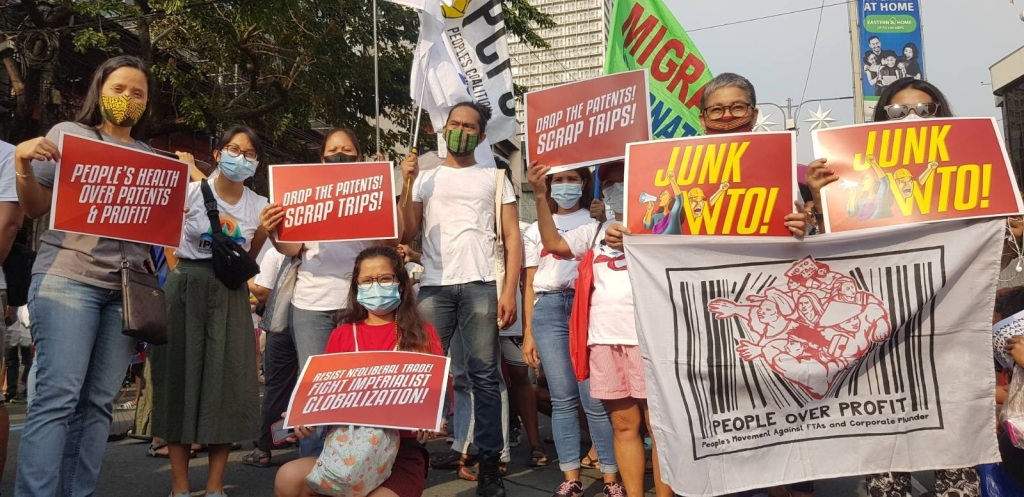
The Coalition is also among the organizers of the campaign “A Future without WTO: People’s Health and Livelihood over Profit!” that recently organized an International Day of Action on November 30 as a global commemoration of the decades-long resistance against the WTO and its neoliberal agenda.
Comments