Banker for poor who hopes to bounce back from pandemic fallout


By Moin Qazi*
Finance is one field where we have witnessed significant innovations in recent decades, and this has transformed our society in many ways. Earlier, we could hardly visualise social change in rural India as it was mired in caste conflicts and was impervious to the winds of change. Before the 1980s, outsiders rarely visited villages. Those who did were the occasional anthropologist, extension staff, social workers and missionaries of various religions. The gradual change in the profile of visitors was the first sign of the embryonic revolution in development finance, which later bloomed into an era of social banking.
It was during this time that bankers started courting villages in large numbers. Their mission was to find trustworthy villagers for providing soft credit to rescue them from moneylenders. This, it was thought, would help villagers start small businesses, promote local economic activities and empower people to climb out of poverty.
The bankers and missionaries, who shared much of the same client pool, were curiously alike in some ways. Usually outsiders to the local community, they tended to discover their own preconceptions in the villages, rather than being able to grasp the local realities and dynamics. Although the missionaries succeeded, the financial revolution was inevitably aborted by populist politicians and local interests. However, soon it became clear that financial inclusion was not just a powerful economic tool but a critical piece in the development ecosystem, and it could no longer be deferred. The Government, too, was keen to lend its full weight.
Committed development organisations, too, saw an opportunity and space and plunged into the field. Among the early bands of development activists who climbed on board was Chetna Sinha, a trained economist. She set up the Mann Deshi Mahila Sahakari Bank in 1997 at Mhaswad village in Satara district of western Maharashtra. As many as 1,335 women pooled their savings (Rs 7.8 lakh) and set up the first bank for and by rural women in India.
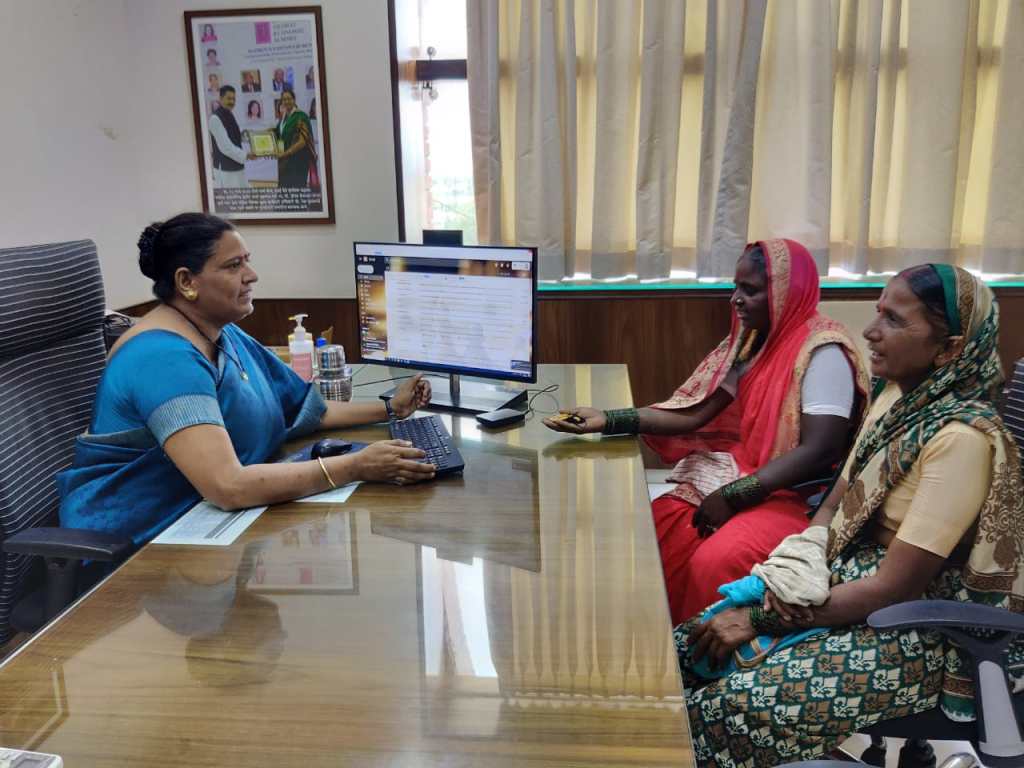
An intrepid lady got an opportunity to join this fledgling institution as an assistant and, with sheer commitment, rose to helm it. She is Rekha Kulkarni who is now the bank’s most visible face. The bank opened at a time when an institution of this type could not have been thought of even by established bankers. Today it has eight branches, 2,00,000 account holders, 30,000 shareholders and has given out loans to the tune of Rs 500 crore. The balance sheet is modest but the model has been applauded by organisations like the Reserve Bank of India (RBI) and the Harvard Business School.
Rekha is the first woman graduate from her village of Shirgaon in Belgaum district in Karnataka. In September 2000, her husband, a retired radar fitter from the Indian Air Force, was struggling to find a stable job. Rekha applied to the Mann Deshi Bank for a job and was hired by Chetna. She turned out to be a great bet. Within six months, she rose to become a branch manager and six years later she became the CEO of the bank. She is part of the faculty at the RBI’s College of Agricultural Banking in Pune. She has travelled to Europe and the US to explain the bank’s model and spoken at Harvard and Yale.
Both Chetna and Rekha knew that without a safe place to save money, it was hard for the poor to take the calculated risks they needed to take to better their lives. While Chetna went about formulating the larger vision, Rekha and the remaining cohort worked on laying the long-term groundwork for the bank.
Both were assailed by several challenges and the bank was expected to address them. However, the benefits of financial inclusion were becoming clear: Affordable credit could help low income populations to build assets and get a business idea off the ground. Appropriately-designed insurance could equip them to buffer their lives against economic shocks such as unemployment, illnesses and disasters.
Financial services are analogous to safe water, basic healthcare and primary education. They are essential to enable people to participate in the benefits of a modern, market-based economy. Ideal financial societies are those which provide safe and convenient ways for people to navigate their daily financial lives. It was such a society that Mann Deshi bank envisioned for its clients — one that was equitable, adaptable, sustainable and more resilient. The bank had a clear credo: It was not to be a clone of a stereotyped conventional bank, but a bank for poor women to be run by them; and its entire structure was conceptualised accordingly. Mann Deshi considers women as a distinct segment with unique challenges, concerns and goals. So, instead of disguising male-focussed products as gender neutral, the bank created specific products tailored to their specific needs.
“We need to study the myriad social and behavioural impediments impacting women, and use this knowledge to design customised financial product offerings. In failing to develop client experiences rooted in men and women’s fundamentally-different perspectives on finance, banks are missing a very significant business opportunity,” believes Rekha. Women don’t have a straight financial journey and have more interruptions and life-stages in their financial lives. Low- income women usually need timely and hassle-free credit to increase their financial prospects. “The greatest fracture facing India is women’s inequality”, reiterates Rekha. “A majority of women are doing business on roads in cities and villages, selling products in markets but they do not have access to affordable credit. Regular banks aren’t typically an option. They have several formalities and fees that can be intimidating. Plus it requires an arduous trek to the nearest town, which can compromise a day’s wages. Banks also find this segment unviable because the costs of underwriting and originating these small loans are substantial,” she says.
Behaviourally, women customers take more time to develop trust in a new product or service. The same holds good for finance and building confidence and trust in them requires more interaction. Rekha felt that her team needed to address the barriers to financial inclusion of women through behavioural and reformist approaches instead of the usual hardware-based one, so that both demand and supply-side were eliminated.
It’s not that the barriers are necessarily different for rural and urban women, but the same challenges are greater for rural ones. “We need last-mile banking agents to help mitigate barriers that prevent universal inclusion of women in the formal banking system, such as dependency on male family members for travel,” emphasises Rekha. The bank has developed another novel idea that is known as the wealth card, which lists out the client’s assets and can also include cattle or machinery, depending on the business. The wealth card is a barometer of the customer’s net worth.
Chetna, as the bank’s founder, has all along emphasised two very important mantras. The first: Never provide poor solutions to poor people. Second: invest in women. The Mann Deshi Bank was an early embracer of modern financial tools and came up with a slew of sophisticated products and services so that poor women could enjoy the same fruits of financial inclusion as the clients of mainline banks.
As the Mann Deshi team seeks to comprehend the new normal following covid-19, it faces many unknowns. Will the clients regain their businesses? What will recovery look like? Much is still a question mark. But the greatest hope is the tenacity and resilience of the women. Fragilities and vulnerabilities may be woven into their daily lives, yet they have consistently shown they can cope. Both the bank and the clients hope to bounce back from the pandemic’s economic fallout.

*Development expert

Comments

TRENDING

Swami Vivekananda's views on caste and sexuality were 'painfully' regressive

By Bhaskar Sur* Swami Vivekananda now belongs more to the modern Hindu mythology than reality. It makes a daunting job to discover the real human being who knew unemployment, humiliation of losing a teaching job for 'incompetence', longed in vain for the bliss of a happy conjugal life only to suffer the consequent frustration.

Jayanthi Natarajan "never stood by tribals' rights" in MNC Vedanta's move to mine Niyamigiri Hills in Odisha

By A Representative The Odisha Chapter of the Campaign for Survival and Dignity (CSD), which played a vital role in the struggle for the enactment of historic Forest Rights Act, 2006 has blamed former Union environment minister Jaynaynthi Natarjan for failing to play any vital role to defend the tribals' rights in the forest areas during her tenure under the former UPA government. Countering her recent statement that she rejected environmental clearance to Vendanta, the top UK-based NMC, despite tremendous pressure from her colleagues in Cabinet and huge criticism from industry, and the claim that her decision was “upheld by the Supreme Court”, the CSD said this is simply not true, and actually she "disrespected" FRA.

Urgent need to study cause of large number of natural deaths in Gulf countries

By Venkatesh Nayak* According to data tabled in Parliament in April 2018, there are 87.76 lakh (8.77 million) Indians in six Gulf countries, namely Bahrain, Kuwait, Oman, Qatar, Saudi Arabia and the United Arab Emirates (UAE). While replying to an Unstarred Question (#6091) raised in the Lok Sabha, the Union Minister of State for External Affairs said, during the first half of this financial year alone (between April-September 2018), blue-collared Indian workers in these countries had remitted USD 33.47 Billion back home. Not much is known about the human cost of such earnings which swell up the country’s forex reserves quietly. My recent RTI intervention and research of proceedings in Parliament has revealed that between 2012 and mid-2018 more than 24,570 Indian Workers died in these Gulf countries. This works out to an average of more than 10 deaths per day. For every US$ 1 Billion they remitted to India during the same period there were at least 117 deaths of Indian Workers in Gulf ...

Stands 'exposed': Cavalier attitude towards rushed construction of Char Dham project

By Bharat Dogra*  The nation heaved a big sigh of relief when the 41 workers trapped in the under-construction Silkyara-Barkot tunnel (Uttarkashi district of Uttarakhand) were finally rescued on November 28 after a 17-day rescue effort. All those involved in the rescue effort deserve a big thanks of the entire country. The government deserves appreciation for providing all-round support.

Uttarakhand tunnel disaster: 'Question mark' on rescue plan, appraisal, construction

By Bhim Singh Rawat*  As many as 40 workers were trapped inside Barkot-Silkyara tunnel in Uttarkashi after a portion of the 4.5 km long, supposedly completed portion of the tunnel, collapsed early morning on Sunday, Nov 12, 2023. The incident has once again raised several questions over negligence in planning, appraisal and construction, absence of emergency rescue plan, violations of labour laws and environmental norms resulting in this avoidable accident.

Celebrating 125 yr old legacy of healthcare work of missionaries

Vilas Shende, director, Mure Memorial Hospital By Moin Qazi* Central India has been one of the most fertile belts for several unique experiments undertaken by missionaries in the field of education and healthcare. The result is a network of several well-known schools, colleges and hospitals that have woven themselves into the social landscape of the region. They have also become a byword for quality and affordable services delivered to all sections of the society. These institutions are characterised by committed and compassionate staff driven by the selfless pursuit of improving the well-being of society. This is the reason why the region has nursed and nurtured so many eminent people who occupy high positions in varied fields across the country as well as beyond. One of the fruits of this legacy is a more than century old iconic hospital that nestles in the heart of Nagpur city. Named as Mure Memorial Hospital after a British warrior who lost his life in a war while defending his cou...

New RTI draft rules inspired by citizen-unfriendly, overtly bureaucratic approach

By Venkatesh Nayak* The Department of Personnel and Training , Government of India has invited comments on a new set of Draft Rules (available in English only) to implement The Right to Information Act, 2005 . The RTI Rules were last amended in 2012 after a long period of consultation with various stakeholders. The Government’s move to put the draft RTI Rules out for people’s comments and suggestions for change is a welcome continuation of the tradition of public consultation. Positive aspects of the Draft RTI Rules While 60-65% of the Draft RTI Rules repeat the content of the 2012 RTI Rules, some new aspects deserve appreciation as they clarify the manner of implementation of key provisions of the RTI Act. These are: Provisions for dealing with non-compliance of the orders and directives of the Central Information Commission (CIC) by public authorities- this was missing in the 2012 RTI Rules. Non-compliance is increasingly becoming a major problem- two of my non-compliance cases are...

Dowry over duty: How material greed shattered a seven-year bond

By Archana Kumar*  This account does not seek to expose names or tarnish identities. Its purpose is not to cast blame, but to articulate—with dignity—the silent suffering of a woman who lived her life anchored in love, trust, and duty, only to be ultimately abandoned.

Pairing not with law but with perpetrators: Pavlovian response to lynchings in India

By Vikash Narain Rai* Lynch-law owes its name to James Lynch, the legendary Warden of Galway, Ireland, who tried, condemned and executed his own son in 1493 for defrauding and killing strangers. But, today, what kind of a person will justify the lynching for any reason whatsoever? Will perhaps resemble the proverbial ‘wrong man to meet at wrong road at night!’