
Human civilisation has always believed that there is something primal about the need for privacy, for secrecy, for personal space. This has, in the world of some judicial authorities, taken to mean “the right to be let alone”-- that is, the right to privacy. They believe “privacy is the beginning of all freedom”.
Every one of us seems to ensure that his or her own privacy is treated as sacred space. However, jurisprudence has still not been able to harness this legal concept into a clear beacon for law enforcement authorities.
A major reason is that the whole idea of privacy is highly nebulous and it seems very difficult to pin it down to a definable idea. But assuming our right to privacy is guaranteed, how do we know what are the boundaries which make private space exclusive and confer an absolute and unfettered right?
Kazi Syed Karimuddin was one member of the Constituent Assembly, who doggedly pursued the idea of privacy as integral to fundamental rights. Born in 1899 in Yavatmal district in Maharashtra, he had studied at the Aligarh Muslim University and became a noted criminal lawyer. He was a prominent member of the Congress and was also a member of the Rajya Sabha from 1954 to 1958.
Endowed with rare forensic skills, Kazi Karimuddin’s vast experience and insights gave him an uncanny knack for unravelling the anatomy and pathology of crimes. He was always apprehensive of the pervasive scope of the intrusive lens of the state as well as private agents. He considered privacy a vital constituent of a healthy constitutional polity since India’s large population of minorities had become vulnerable due to the emerging communal situation.
Kazi Karimuddin moved an amendment to protect individuals from unreasonable search-and-seizure, on the lines of the American, Irish, and German Constitutions. This was the first time that the right to privacy was so strongly articulated and espoused in the Constituent Assembly. Though, it couldn’t find an explicit place in the Constitution at the time.
The Constitution of India Bill 1895, one of the embryonic documents that projected India’s constitutional vision, stated: ‘Every citizen has in his house an inviolable asylum.’ The Commonwealth of India Bill, 1925, protected unwarranted interference to one’s dwelling without due process.
The Nehru Report (Motilal Nehru, 1928), an outcome of the All Parties Conference, guaranteed a similar right.
A few years before the beginning of formal constitution-making, a draft of the Indian Constitution (MN Roy, 1944), as endorsed by the Radical Democratic Party, for the first time extended the right to privacy to include private correspondence.
Four years later another Draft Constitution (Socialist Party, 1948) granted protection against unlawful entry into one’s dwelling except under the due process of law.
The Constituent Assembly constituted Principal Committees, with internal sub-committees, for preparing reports that would enable the Drafting Committee to develop a draft Constitution. Prominent among these was the Advisory Committee on Fundamental Rights. Members of this committee -- including Dr BR Ambedkar, KM Munshi and Harman Singh -- staunchly advocated for the inclusion of a right to privacy as a fundamental right.
Harman Singh was inspired by the Czech Constitution and he stated in his report that ‘Every dwelling shall be inviolable’. KM Munshi sought to make the right to the inviolability of one’s home and the right to the secrecy of one’s correspondence a fundamental right. In his States and Minorities Report, Dr Ambedkar advocated for 'the right of the people to be secure in their persons, houses, papers, and effects against unreasonable searches and seizures'.
There was strong opposition to these proposals.
BN Rau and Alladi Krishnaswamy Ayyar disagreed with the inclusion of the right to privacy within fundamental rights. Rau was primarily concerned with the interference of the right to privacy with investigative powers of the police authorities. Whereas Ayyar believed that granting the right to privacy and secrecy in correspondence would be disastrous, as it would elevate every private and civil communication to that of state papers.
This would adversely affect civil litigation where documents form an essential part of the evidence. Both Rau and Ayyar were successful in persuading the Advisory Committee to leave out provisions relating to the right to privacy. The final report of the Committee did not bear any mention of the Right to Privacy.
There were two separate attempts later. On April 30, 1947, Somnath Lahiri proposed to make the right to privacy of correspondence a fundamental right. However, his proposal did not receive traction. Somnath Lahiri proposed an amendment, adding a new clause under ‘Rights to Freedom’, which read, ‘The privacy of correspondence shall be inviolable and may be infringed only in cases provided by law.’ However, this was never voted upon or even debated.
A year later Kazi Syed Karimuddin moved an amendment to include the right of the people to be secure in their persons, houses, papers, and effects against unreasonable searches and seizures in Article 20 (Draft Article 14) of the Constitution.
Every one of us seems to ensure that his or her own privacy is treated as sacred space. However, jurisprudence has still not been able to harness this legal concept into a clear beacon for law enforcement authorities.
A major reason is that the whole idea of privacy is highly nebulous and it seems very difficult to pin it down to a definable idea. But assuming our right to privacy is guaranteed, how do we know what are the boundaries which make private space exclusive and confer an absolute and unfettered right?
Kazi Syed Karimuddin was one member of the Constituent Assembly, who doggedly pursued the idea of privacy as integral to fundamental rights. Born in 1899 in Yavatmal district in Maharashtra, he had studied at the Aligarh Muslim University and became a noted criminal lawyer. He was a prominent member of the Congress and was also a member of the Rajya Sabha from 1954 to 1958.
Endowed with rare forensic skills, Kazi Karimuddin’s vast experience and insights gave him an uncanny knack for unravelling the anatomy and pathology of crimes. He was always apprehensive of the pervasive scope of the intrusive lens of the state as well as private agents. He considered privacy a vital constituent of a healthy constitutional polity since India’s large population of minorities had become vulnerable due to the emerging communal situation.
Kazi Karimuddin moved an amendment to protect individuals from unreasonable search-and-seizure, on the lines of the American, Irish, and German Constitutions. This was the first time that the right to privacy was so strongly articulated and espoused in the Constituent Assembly. Though, it couldn’t find an explicit place in the Constitution at the time.
Pre-independence history of right to privacy
In the late nineteenth and twentieth century, the idea of privacy was inextricably linked with that of the inviolability of the house or property.The Constitution of India Bill 1895, one of the embryonic documents that projected India’s constitutional vision, stated: ‘Every citizen has in his house an inviolable asylum.’ The Commonwealth of India Bill, 1925, protected unwarranted interference to one’s dwelling without due process.
The Nehru Report (Motilal Nehru, 1928), an outcome of the All Parties Conference, guaranteed a similar right.
A few years before the beginning of formal constitution-making, a draft of the Indian Constitution (MN Roy, 1944), as endorsed by the Radical Democratic Party, for the first time extended the right to privacy to include private correspondence.
Four years later another Draft Constitution (Socialist Party, 1948) granted protection against unlawful entry into one’s dwelling except under the due process of law.
The Constituent Assembly constituted Principal Committees, with internal sub-committees, for preparing reports that would enable the Drafting Committee to develop a draft Constitution. Prominent among these was the Advisory Committee on Fundamental Rights. Members of this committee -- including Dr BR Ambedkar, KM Munshi and Harman Singh -- staunchly advocated for the inclusion of a right to privacy as a fundamental right.
Harman Singh was inspired by the Czech Constitution and he stated in his report that ‘Every dwelling shall be inviolable’. KM Munshi sought to make the right to the inviolability of one’s home and the right to the secrecy of one’s correspondence a fundamental right. In his States and Minorities Report, Dr Ambedkar advocated for 'the right of the people to be secure in their persons, houses, papers, and effects against unreasonable searches and seizures'.
There was strong opposition to these proposals.
BN Rau and Alladi Krishnaswamy Ayyar disagreed with the inclusion of the right to privacy within fundamental rights. Rau was primarily concerned with the interference of the right to privacy with investigative powers of the police authorities. Whereas Ayyar believed that granting the right to privacy and secrecy in correspondence would be disastrous, as it would elevate every private and civil communication to that of state papers.
This would adversely affect civil litigation where documents form an essential part of the evidence. Both Rau and Ayyar were successful in persuading the Advisory Committee to leave out provisions relating to the right to privacy. The final report of the Committee did not bear any mention of the Right to Privacy.
There were two separate attempts later. On April 30, 1947, Somnath Lahiri proposed to make the right to privacy of correspondence a fundamental right. However, his proposal did not receive traction. Somnath Lahiri proposed an amendment, adding a new clause under ‘Rights to Freedom’, which read, ‘The privacy of correspondence shall be inviolable and may be infringed only in cases provided by law.’ However, this was never voted upon or even debated.
A year later Kazi Syed Karimuddin moved an amendment to include the right of the people to be secure in their persons, houses, papers, and effects against unreasonable searches and seizures in Article 20 (Draft Article 14) of the Constitution.
Members of the Advisory Committee on Fundamental Rights Dr BR Ambedkar, KM Munshi and Harman Singh staunchly advocated for the right to privacy
He cited examples of the American and Irish Constitution and reminded the Assembly of Dr Ambedkar's similar proposal to the Committee of Fundamental Rights. The proposed text read as follows:
“The right of the people to be secure in their persons, houses, papers, and effects against unreasonable searches and seizures shall not be violated and no warrants shall issue but upon probable cause supported by oath or affirmation and particularly describing the place to be searched and the persons or things to be seized".
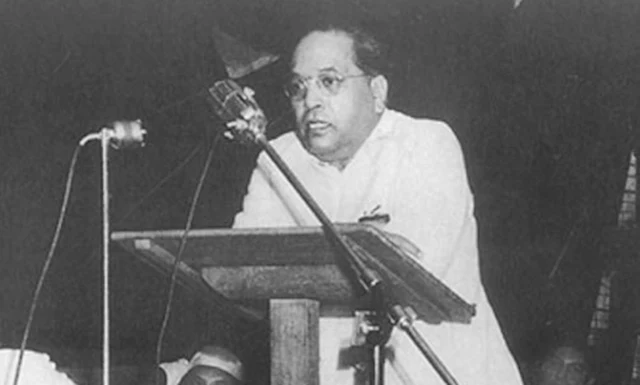 Dr Ambedkar noted that it was a useful provision, though it was part of the Criminal Procedure Code. He observed that legislatures of the future may abrogate the provision. Hence, on account of their criticality to personal liberty, it was desirable to place them beyond the reach of the legislature.
The Vice-President of the Constituent Assembly attempted twice to put the Karimuddin text to vote. Although he declared the amendment as having been accepted both times, TT Krishnamachari objected, saying both times that the majority vote was of those who were not in favour of the amendment.
The records of the day's debates suggest that there was unrest and at Jawaharlal Nehru’s behest, voting had to be postponed. Eventually, Karimuddin’s amendment was put to vote on a different day with no debate and was defeated.
The Constituent Assembly seems to have made its decision with very little meaningful debate on the subject
The next attempt at recognising privacy came from Pandit Thakur Das Bhargva. He moved an amendment to add a new article after Article 15, which said: ‘No person shall be subjected to unnecessary restraints or to unreasonable search of person or property.’ He referred to the previous attempt of Kazi Karimudin and Dr Ambedkar to incorporate this principle into the Constitution.
However, he was opposed by HV Kamath. The contention of Kamath was that delineating an extensive procedure under which a person can be deprived of his liberty amounted to unnecessary intrusion into the Constitution as it should be reserved for future Parliaments to determine.
There is so much individual data in public space that ill-intentioned entities can mine and harvest it for vicious objectives. It is now abundantly clear that our privacy is in a parlous state and much of our personal stuff has already been exposed to the public eye. We are being constantly warned that we should not manage even our insignificant details clumsily because sharing it cavalierly carries invisible and unfathomable hazards.
The government now has many methods, besides tapping into your phone wire, for finding out what you’re up to. Most of us store more in the cloud than in lockboxes. It does not make sense to constrain the technological capacities of law enforcement just because technology allows it to work more efficiently. But those capacities can also lead to a society whose citizens have nowhere to hide and the very idea of privacy becomes an oxymoron.
We can only re-emphasise, at the cost of an overstatement, that functional anonymity is as valuable in commerce as in speech.
In its judgment in Justice KS Puttaswamy v. Union of India, the Supreme Court ended the constitutional limbo by recognising privacy as the constitutional core of human dignity and the foundation of constitutional morality. It held that privacy is a natural right that inheres in allnatural persons and is inherently protected under the various fundamental freedoms enshrined under Part III of the Indian Constitution.
The judgment came at a time when individuals are being regularly confronted by an invasive state, a domineering society, and intrusive businesses. The court emphasized privacy as a necessary condition for “seclusion” which in turn enables the exercise of freedoms like speech, expression, and association. The Supreme Court overruled verdicts given in the M.P. Sharma case in 1958 and the Kharak Singh case in 1961, both of which said that the right to privacy is not protected under the Indian constitution.
The challenges and concerns before the Supreme Court had agitated the clairvoyant minds of some of the founding fathers of the constitutions, even though digitisation was inconceivable in those days. Yet, the vast possibilities of the human mind and creativity were already becoming evident.
But more important is that even after three years of the judgment in ‘KS Puttaswamy’, we hardly see rights-based handling of personal data. The judgment effected little change in the government’s thinking or practice. It has continued to commission and execute mass surveillance programmes.
The Supreme Court has been very candid in its observations on the pervasive scope of the Right to Privacy in the Puttaswamy case. The contention that the right to privacy should be subordinated to the economic needs of the poor was considered by the Supreme Court, and the Court held for the first time that there is a fundamental right to privacy in India.
The response of Justice Chandrachud, who delivered the Plurality Opinion, is epochal: “The refrain that the poor need no civil and political rights and are concerned only with economic well-being has been utilised through history to wreak the most egregious violations of human rights.…The pursuit of happiness is founded upon autonomy and dignity. Both are essential attributes of privacy which makes no distinction between the birthmarks of individuals.”
---
*Policy and development expert, grandson of Kazi Syed Karimuddin. Views are personal

The Vice-President of the Constituent Assembly attempted twice to put the Karimuddin text to vote. Although he declared the amendment as having been accepted both times, TT Krishnamachari objected, saying both times that the majority vote was of those who were not in favour of the amendment.
The records of the day's debates suggest that there was unrest and at Jawaharlal Nehru’s behest, voting had to be postponed. Eventually, Karimuddin’s amendment was put to vote on a different day with no debate and was defeated.
The Constituent Assembly seems to have made its decision with very little meaningful debate on the subject
The next attempt at recognising privacy came from Pandit Thakur Das Bhargva. He moved an amendment to add a new article after Article 15, which said: ‘No person shall be subjected to unnecessary restraints or to unreasonable search of person or property.’ He referred to the previous attempt of Kazi Karimudin and Dr Ambedkar to incorporate this principle into the Constitution.
However, he was opposed by HV Kamath. The contention of Kamath was that delineating an extensive procedure under which a person can be deprived of his liberty amounted to unnecessary intrusion into the Constitution as it should be reserved for future Parliaments to determine.
Privacy in Modern World
Digital advancement has brought immense benefits and conveniences. By having access to copious amounts of personal data that can be freely extracted, certain apps make the online world seem customised for us. Those who want to recruit clients for their products can know how old we are or where we live or what our eating habits are or what books we like or which brand of products we use.There is so much individual data in public space that ill-intentioned entities can mine and harvest it for vicious objectives. It is now abundantly clear that our privacy is in a parlous state and much of our personal stuff has already been exposed to the public eye. We are being constantly warned that we should not manage even our insignificant details clumsily because sharing it cavalierly carries invisible and unfathomable hazards.
The government now has many methods, besides tapping into your phone wire, for finding out what you’re up to. Most of us store more in the cloud than in lockboxes. It does not make sense to constrain the technological capacities of law enforcement just because technology allows it to work more efficiently. But those capacities can also lead to a society whose citizens have nowhere to hide and the very idea of privacy becomes an oxymoron.
We can only re-emphasise, at the cost of an overstatement, that functional anonymity is as valuable in commerce as in speech.
In its judgment in Justice KS Puttaswamy v. Union of India, the Supreme Court ended the constitutional limbo by recognising privacy as the constitutional core of human dignity and the foundation of constitutional morality. It held that privacy is a natural right that inheres in allnatural persons and is inherently protected under the various fundamental freedoms enshrined under Part III of the Indian Constitution.
The judgment came at a time when individuals are being regularly confronted by an invasive state, a domineering society, and intrusive businesses. The court emphasized privacy as a necessary condition for “seclusion” which in turn enables the exercise of freedoms like speech, expression, and association. The Supreme Court overruled verdicts given in the M.P. Sharma case in 1958 and the Kharak Singh case in 1961, both of which said that the right to privacy is not protected under the Indian constitution.
The challenges and concerns before the Supreme Court had agitated the clairvoyant minds of some of the founding fathers of the constitutions, even though digitisation was inconceivable in those days. Yet, the vast possibilities of the human mind and creativity were already becoming evident.
But more important is that even after three years of the judgment in ‘KS Puttaswamy’, we hardly see rights-based handling of personal data. The judgment effected little change in the government’s thinking or practice. It has continued to commission and execute mass surveillance programmes.
The Supreme Court has been very candid in its observations on the pervasive scope of the Right to Privacy in the Puttaswamy case. The contention that the right to privacy should be subordinated to the economic needs of the poor was considered by the Supreme Court, and the Court held for the first time that there is a fundamental right to privacy in India.
The response of Justice Chandrachud, who delivered the Plurality Opinion, is epochal: “The refrain that the poor need no civil and political rights and are concerned only with economic well-being has been utilised through history to wreak the most egregious violations of human rights.…The pursuit of happiness is founded upon autonomy and dignity. Both are essential attributes of privacy which makes no distinction between the birthmarks of individuals.”
---
*Policy and development expert, grandson of Kazi Syed Karimuddin. Views are personal
Comments