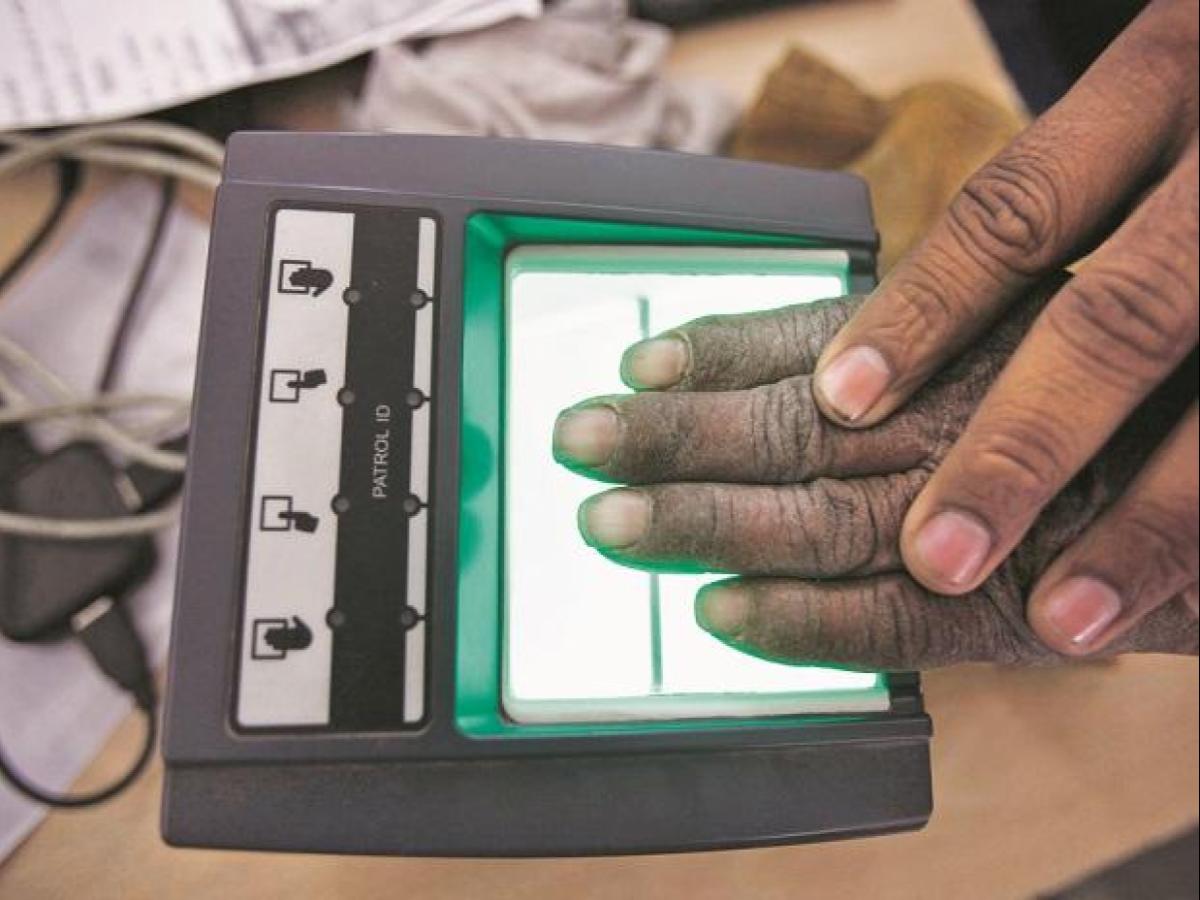
In a letter to the Election Commission of India (ECI), more than 200 prominent citizens have said that a petition Ashwini Kumar Upadhyay vs Union of India before the Delhi High Court seeking an e-voting system using fingerprint and face biometrics should be “dismissed”, as aadhaar linkage with the Election ID “would harm the right to vote that Indian citizens have under our democracy, flowing from the Constitution and the Representation of People’s Act, 1951.”
While the Delhi High Court has asked the ECI to “consider” the plea within eight weeks, the letter states, the Act considers universal adult suffrage to Indian citizens (including non-resident Indians (NRIs) still holding an Indian passport), and Section 9 of the aadhaar Act, 2016, does not constitute proof
The letter says, “Linking of aadhaar number with voter ID would effectively be an exercise involving significant public expense and yielding no benefit whatsoever in determining the genuineness of voters”, warning that the linking would “weaken and contaminate” the Indian electoral system, even as harming the functioning of India’s democracy, as there are many instances where aadhaar IDs had been found with non-nationals.
The letter asks the ECI to recall the “disastrous outcome” of a previous exercise of aadhaar-voter ID linking conducted as part of the National Electoral Roll Purification and Authentication Program (NERPAP) in 2015, due to which at least 30 lakh voters disenfranchised. “As that exercise demonstrates, carrying out timely door-to-door verification of voters is as yet the most effective method of updating electoral rolls and ensuring accuracy of voter data,” insists the letter.
The signatories of the letter include Dalit rights leader Bezwada Wilson, politicians Brinda Karat and Yashwant Sinha, bureaucrat-turned-activist Harsh Mander, political scientist Jagdeep Chhokar, development economist Jean Dreze, actor Nandita Das, RTI activists Nikhil Dey and Venkatesh Nayak, ex-Gujarat DGP PGJ Nampoothiri, journalist P Sainath, farmers’ activist Sagar Rabari, human rights activist Shabnam Hashmi, film director Shyam Benegal, and social scientist Sukhadeo Thorat.
Text:
We are writing in reference to the Delhi High Court’s direction in Ashwini Kumar Upadhyay vs Union of India , wherein the petitioner “proposes an e-voting system using fingerprint and face biometric” and, for that purpose, linking of aadhaar number with voter ID, in response to which the Election Commission of India (ECI) is requested to consider the plea within 8 weeks.We believe that such a consideration has much graver implications for our democracy as a whole, compelling us to share our grave concerns in this letter. At the outset, we remind the Hon’ble Commission that the Representation of People’s Act, 1951, currently limits universal adult suffrage to Indian citizens (including non-resident Indians (NRIs) still holding an Indian passport).

We would like to bring to the Hon’ble Commission’s attention that, per Section 9 of the aadhaar Act, 2016 , “the aadhaar number or authentication thereof” does not constitute proof of citizenship - the full section is quoted below: “9. The aadhaar number or the authentication thereof shall not, by itself, confer any right of, or be proof of citizenship or domicile in respect of an aadhaar number holder.”
Linking of aadhaar number with voter ID would effectively be an exercise involving significant public expense and yielding no benefit whatsoever in determining the genuineness of voters. On the contrary, many aadhaar IDs have been found with non-nationals. Taking into account the many cases of blatantly incorrect enrollments, leave aside fakes , linking aadhaar with the electoral roll would weaken and contaminate the Indian electoral system. It would undermine the integrity of the Indian election process and harm the functioning of democracy.
We also ask the Hon’ble Commission to recollect the disastrous outcome of the previous exercise of aadhaar-voter ID linking conducted as part of the National Electoral Roll Purification and Authentication Program (NERPAP) in 2015, due to which at least 30 lakh voters disenfranchised. As that exercise demonstrates, carrying out timely door-to-door verification of voters is as yet the most effective method of updating electoral rolls and ensuring accuracy of voter data.
Specifically addressing the bogey that “e-voting system using fingerprint and face biometric” can “prevent bogus or fabricated voting”, we would like to point out that not only does possessing an aadhaar number fail to qualify the number holder’s eligibility to vote, biometric-linked authentication would on the contrary disenfranchise many rightful voters, in particular the elderly, manual labourers, and those living in areas suffering a lack of electric power and/or network coverage.
Lastly, we draw your attention to the 2017-2018 State of Aadhaar Report , one of whose findings is that self-reported errors in aadhaar data were found to be one-and-one-half times higher than errors in the electoral database [Pg 10]. It would therefore be erroneous to conclude that linking aadhaar number to voter ID will help “purify” the electoral rolls in any manner.
Aadhaar linkage would harm the right to vote that Indian citizens have under our democracy, flowing from the Constitution and the Representation of People’s Act, 1951. We urge you to seek the dismissal of Upadhyay’s petition for the reasons listed above at the earliest, and not let the issue drag on any further.
Linking of aadhaar number with voter ID would effectively be an exercise involving significant public expense and yielding no benefit whatsoever in determining the genuineness of voters. On the contrary, many aadhaar IDs have been found with non-nationals. Taking into account the many cases of blatantly incorrect enrollments, leave aside fakes , linking aadhaar with the electoral roll would weaken and contaminate the Indian electoral system. It would undermine the integrity of the Indian election process and harm the functioning of democracy.
We also ask the Hon’ble Commission to recollect the disastrous outcome of the previous exercise of aadhaar-voter ID linking conducted as part of the National Electoral Roll Purification and Authentication Program (NERPAP) in 2015, due to which at least 30 lakh voters disenfranchised. As that exercise demonstrates, carrying out timely door-to-door verification of voters is as yet the most effective method of updating electoral rolls and ensuring accuracy of voter data.
Specifically addressing the bogey that “e-voting system using fingerprint and face biometric” can “prevent bogus or fabricated voting”, we would like to point out that not only does possessing an aadhaar number fail to qualify the number holder’s eligibility to vote, biometric-linked authentication would on the contrary disenfranchise many rightful voters, in particular the elderly, manual labourers, and those living in areas suffering a lack of electric power and/or network coverage.
Lastly, we draw your attention to the 2017-2018 State of Aadhaar Report , one of whose findings is that self-reported errors in aadhaar data were found to be one-and-one-half times higher than errors in the electoral database [Pg 10]. It would therefore be erroneous to conclude that linking aadhaar number to voter ID will help “purify” the electoral rolls in any manner.
Aadhaar linkage would harm the right to vote that Indian citizens have under our democracy, flowing from the Constitution and the Representation of People’s Act, 1951. We urge you to seek the dismissal of Upadhyay’s petition for the reasons listed above at the earliest, and not let the issue drag on any further.
Why are such petitions even encouraged.. Linking cards should have been done long time ago as part of the implementation itself. I see no harm in voters being able to vote with finger prints and biometrics. So much technology and so many cards and voters still are being turned back as they are not in the voting list ?? this needs to stop. The bad elements will always stand in the way of good policies. We need good governance and enable people to vote and people who file such false petitions quoting hughe expenses etc should first start paying their taxes before complaining.
ReplyDeleteEvery civilized nation has it's " aadhar " card.
ReplyDeletei.e USA, U.K. France. Germany, Canada, you name it.
USA- Social security Number
UK- National Ientification number
Canada- Social Insuarance number
With his number/card, the person cannot open a bank account, file taxes, go to school, get a loan, get a pension.
Every resident in these nations must have one, no exceptions. Are all advanced, civilized nations- stupid?
Only thieves, money launderers, criminals do not want the aadhar card implemented/
I don't understand what kind of a shitty argument this is. Aadhar HAS to be linked to everything you do! While alive or dead! That leads to good governance in the future.
ReplyDelete