By Moin Qazi*
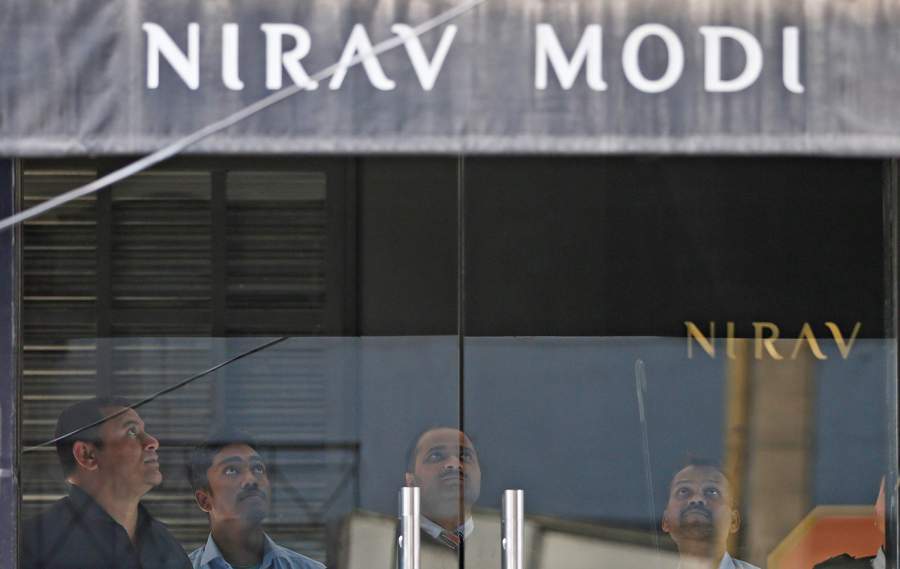
The world’s great philanthropist and investment leader, Warren Buffett, once said, “It’s only when the tide goes out that you realise who has been swimming naked”. Well, it’s the ebb of the tide for many of India’s high-flying crony capitalists like Nirav Modi and Mehul Choksi, as they find themselves caught in an ignominious buff. Their diamonds may have sparkled on the necklines of world’s acclaimed models, but their names are now dirty blots on the nation’s financial skyline. Their misdeeds have shaken the credibility of India’s $60 billion gem and jewellery industry, which is the country’s second largest forex earner, accounting for about 16 per cent of the total merchandise exports.
Similarly, sometimes, it takes a pitch-black economy to reveal who and what in the financial firmament really shine. It is only when darkness falls that the stars start twinkling. The moonshine on an otherwise bleak sky has been made possible by the small honest taxpayers who are transfusing precious blood to extend a lifeline to the bleeding banks.
It is tragic that even as the country is grappling with massive problems confronting its struggling masses, these ignoble billionaires are having regular rides to the public trough and reveling in plunder and loot. The proportion of dodgy loans — loans on which the borrower is not making interest payments or repaying any principal — in India has surged to be among the highest in the world.
The question is: Why should ordinary people bear the burden of fat cats who keep indulging their desires by dipping into public savings and laugh all the way to the bank? These free loaders are gleefully and remorselessly winnowing scarce bank capital and the Government has to goose these banks with spruced up balanced sheets to make them lend again. Ironically, instead of being chastised, they are lauded as captains of the industry and adorn glorious positions in industry associations.
India’s near $147 billion pile of soured loans is a classic example of how powerful and politically influential tycoons undermine the rules to secure credit and then default on it. When borrowers become insolvent, their loans are added to an existing mountain of debt. Each time it happens, banks have to make heavy write-downs, plowing the dud loans like rotten potatoes, ultimately choking the credit line. To keep these banks going, the Government has to regularly keep injecting capital into them.
Most major loan defaults have their genesis in frauds; these have ballooned non-performing assets (NPAs). The Reserve Bank of India’s (RBI) June 2017 “Financial Stability Report” says losses from financial sector frauds rose 72 per cent in the five years to fiscal 2017 to Rs 16,770 crore. State-run banks have reported 8,670 loan fraud cases, totaling 612.6 billion rupees ($9.58 billion) over the last five financial years up to March 31, 2017.
Most big defaulters have the money to employ legal eagles who can play the judicial system and it is here where the law flounders. The country has the most draconian laws in books but they are ineffective against powerful dodgers. We show such promptness in condemning waivers for poor farmers but we lack the courage to tame the large fishes because they have enormous clout. Remember how banks become aggressive in turning mortgage defaulters on to the streets?
The indebted farmers are tying the noose out of sheer humiliation then there is a class of salaried people who rarely default, but are chased down for their small unpaid bursaries .The bankers seem to be totally helpless when it comes to malfeasant promotes of big businesses. The stink of their loans and scams has leached its poison into the entire financial system.
Swindlers have outfoxed a system which no longer appears impregnable. This failure has shown just how deeply lacerated are the central parts of our economic life. When institutions, such as banks, that are supposed to embody trust, are shown to be brittle, it leads to concerns of how fragile the economy is. The RBI now no longer appears to be the financial seer and therapist which insulated the domestic economy from the financial turmoil of 2008.
Scams are a product of a deadly concoction of greed and immorality. However, abuse of the financial system has been made possible on account of several weaknesses in it: Lax governance standards, supine boards, poor lending practices, manual processes, unionised staff, rogue bank officials, sloppy compliances, outdated software and lack of understanding of technology.
Costs may have also impeded the banks from upgrading their systems. In an age which heralds technology as the silver bullet, we should not overlook their most important source of competitive advantage: Their people. Compliance and controls are weak the world over. They are, to a large extent, dependent on people running it. And remember, a process is only as good as the people managing it. The most agile auditors will also have to struggle to stop managers who are determined to hide their dirty laundry from view.
It is strange that repayment ethics, so deeply ingrained in Indian culture, have been made foul words by politicians. The sanctity of repayment, no matter how deceitfully the debt was contrived and how cruel the costs, has been driven into the Indian consciousness since the time of Manusmruti. Today the debts contracts have lost their entire sanctity. It is a fact that the moral culture is under severe strain and any amount of laws and rules can’t discipline the toxic human impulses. Most people have a psychological aversion to repaying bank loans. In several cases, they have sufficient assets and capital to redeem their debt but they use every possible means to avoid it.
Things have turned so ugly that whether it is an individual or institution, getting back any money at all is a reason for jubilation. We have seen how business leaders splurge on birthday bashes but avoid repaying their loans. They have neither lost their homes nor have had to change their lifestyles despite offering personal guarantees for loans to banks? In this respect, small customers are far more honest than big ones. Some of them have such exemplary credit histories that it makes the best bankers blush.
The reason for protecting the borrower against the creditor is that the much reviled moneylender looms large in our collective psyche. The scenario now is totally different. Big borrowers are not like helpless farmers and the lender today is not the cruel sahukar but the public bank. When these large businessmen default, they rob each one of us taxpayers. In several cases, precious and scarce banks funds are being used to finance opulent lifestyles of these people.
The turmoil has prompted calls for improvising risk management models that seem to have created an illusory sense of security. Models and machines cannot act as a surrogate for human expertise. Money management is no more a genteel world. Bankers will now have to bring in hard-boiled traders instincts to make it safe and secure. In a prophetic warning way back in 1913, John Maynard Keynes wrote in “Indian Currency and Finance”: “In a country so dangerous for banking as India, (it) should be conducted on the safest possible principles”.
The Indian financial sector is at crossroads and its leaders will now have to use their financial alchemy to overcome its most challenging moment. Perhaps it is one of those occasions where Rudyard Kipling’s advice can be the best guide:
“If you can trust yourself when all men doubt you,
but make allowance for their doubting too”.
It will not be out of place to quote former RBI Governor Raghuram Rajan from his Homer Jones Memorial Lecture, delivered at Federal Reserve Bank of St. Louis, St. Louis, Missouri on April 15, 2009. “A crisis offers us a rare window of opportunity to implement reforms-it is a terrible thing to waste. The temptation will be to overregulate, as we have done in the past. This creates its own perverse dynamic… Perhaps rather than swinging maniacally between too much and too little regulation, it would be better to think of cycle-proof regulation. ”
—
*Development expert
Comments