Complete Narmada oustees' rehab to "help" Gujarat BJP win 2017 polls: Madhya Pradesh, Maharashtra told
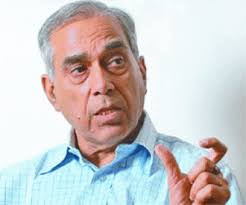 |
| Nripendra Mishra |
The Prime Minister Narendra Modi's principal secretary Nripendra Mishra is learnt to have told chief secretaries of Madhya Pradesh and Maharashtra to work overtime to ensure to "complete" the Resettlement and Rehabilitation (R&R) process of the Narmada dam oustees at the earliest, so that the Gujarat BJP is able to seek a "much-needed boost in terms of favourable public opinion before the Assembly elections in 2017."
According well-informed sources in Delhi, they were told at a high-level meeting on May 6, in which Gujarat chief secretary GR Aloria was also present, that the Gujarat's BJP rulers are under "severe pressure owing to the negative publicity due to the Patidar agitation in the state."
This would need to happen because, the state’s oft repeated claim that the Narmada dam has "immensely increased" the irrigation potential of the state remains a "palpable lie to this day, a fact vindicated by the still dry regions of Kutch and Saurashtra", it was suggested at the meeting.
The meeting was held amidst the anti-dam Narmada Bachao Andolan (NBA) alleging that the “irrigation benefit” would never reach the farmers, as waters are being increasingly diverted to industries in Gujarat.
It was suggested at the meeting that, taking advantage of the failure to complete the R&R process would remain a major hurdle for closing the Narmada dam's gates, without which far-off regions of the state would not be able to get enough waters for irrigation.
During the meeting, the Gujarat chief Secretary reportedly claimed that “Maharashtra has only around 300 families to be resettled while MP needs to settle more – around 1200 families”.
However, NBA claims, “The respective state governments have repeatedly and falsely claimed complete rehabilitation of the projected affected persons despite multiple evidences put forward by us, which has often been validated by the ongoing proceedings in front of the grievances redressal authorities GRA or numbers unearthed by Jha Commission.”
“When there are not less than 40,000 families in Madhya Pradesh who are to face the watery grave this monsoon, the chief secretary of Madhya Pradesh is seeking compliance by putting forward a demand of Rs 350 crore for rehabilitation”, the NBA said in a statement.
“In Maharashtra alone, there are about 791 declared families; a figure which was arrived at following jointly prepared report after a thorough check up of all documents in the Collectors office by both, activists from the NBA and government officials over few months in 2015”, the NBA said.
“This figure does not include the 300-400 yet to be declared oustee families, who are currently at the mercy of seeking their declaration by the Grievance Redressal Authority (GRA) chaired by a retired High Court judge, in the state”, it insisted.
NBA commented, “The State’s brute force and its unyielding arrogance asserts itself blatantly, particularly so under the current Central government’s disposition. This ego-driven project is nothing but a facade to cover decades of ‘destruction’ in the name of ‘development’ placing a veil over the inhuman treatment meted out to the people affected by this project!”
“Such a falsehood, unprecedented in history, needs to be countered not before the Courts of justice but in people’s court in which about 40,000 families, communities within the submergence area need support of all those who are courageous to challenge the present paradigm of development”, it added.
Comments
Post a Comment
NOTE: Hateful, abusive comments won't be published. -- Editor